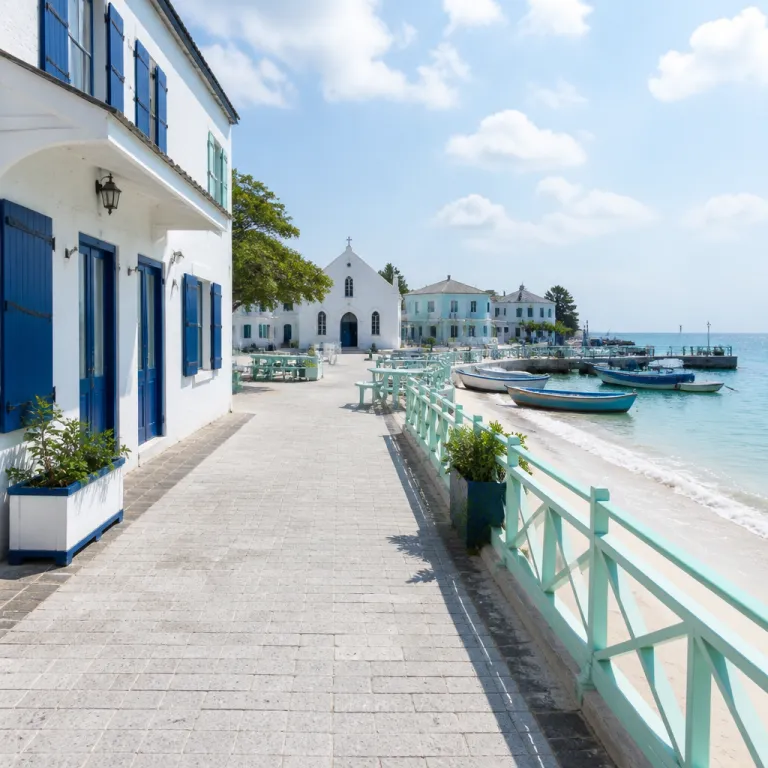
The walking circuit from the Platinum Coast hotels
Step outside your lobby and Holetown immediately feels like a real town. Within fifteen relaxed minutes on foot, you can map most of the west coast highlights that matter to curious couples. The scale is intimate, the pace slow, and the mix of luxury hotels, parish history, and everyday island life is unusually well balanced.
From the main west coast properties clustered along the Platinum Coast, your walking circuit naturally follows the line of the beach and the coast road. Start at one of the newer large resorts at the northern end of Holetown, close to Folkestone Marine Park, where the centre of gravity has quietly shifted over the past decade. From here, the coastal experiences within easy reach include shallow water swimming, reef snorkelling, and sunset drinks at low slung restaurant bars where the dress code is more bare feet than blazer.
Head south and you pass a string of luxury hotels that front some of the calmest beaches on the island. The simple but deeply rewarding pleasures along this stretch range from early morning walks on near empty sand to late afternoon rum punches at small local beach shacks. Because the coast path and the main road run close together, you can alternate between sand and pavement, dipping into shops, cafés, and shaded courtyards whenever the sun feels too strong.
On the inland side of the road, low rise property after property hides leafy courtyards, small pools, and the kind of quiet that many guests never realise sits just beyond the resort gate. This is where Holetown feels most like a lived in Barbadian town rather than a resort corridor. You hear schoolchildren, church bells from St. James Parish Church, and the low hum of local life that gives this part of the Platinum Coast its understated beauty.
As you loop back toward your hotel, you will notice how close everything sits in this compact corner of St. James, especially compared with spread out Bridgetown or sleepier Speightstown. That proximity is what makes walking here so appealing for couples who prefer to leave the shuttle behind. You can move from marine park to parish church, from luxury hotel bar to local rum shop, in roughly the time it takes a taxi to clear the first junction.
Dining beyond the resort: where locals actually eat and drink
Leaving the half board comfort of your hotel can feel like a gamble, yet in Holetown it is the smartest move you can make. The west coast activities that locals rate most highly almost always involve food, from Friday fish to Sunday lunch under the trees. Step out on foot and you quickly understand why this town has become the informal dining capital of the Platinum Coast.
Along the main strip, restaurants and casual bars range from polished waterfront terraces to tiny spots where the menu is written on a chalkboard. You will find local Bajan cooking alongside international plates, but the best tables lean into the island rather than away from it. Think grilled fish caught off the coast that morning, macaroni pie, and hot sauce made in small batches rather than shipped in from a factory near the River Thames. Expect mid range mains to sit roughly in the BBD $45–$80 bracket, with beach shacks and food trucks often coming in lower.
For couples planning a longer stay, it is worth timing your trip around the island’s festival calendar and securing your room early. If you are considering Crop Over, use a specialist guide to understand how quickly the best properties in Holetown and Bridgetown fill and how far in advance to book. Once you are here, evenings tend to revolve around slow dinners, live music, and long walks back along the beach under a sky that feels close enough to touch.
Do not overlook the small food courts and clusters of eateries tucked just off the main road. These are where office workers and shop staff eat, and where you will find some of the best value plates on the Platinum Coast, often in the BBD $20–$35 range for hearty local dishes. The atmosphere is relaxed, the water jugs keep coming, and the mix of visitors and local regulars gives Holetown a grounded, unforced charm.
As the sun sets, the town changes character without losing its essential calm. Beach bars light their torches, parish church bells mark the hour, and the sound of ice in glasses replaces the daytime buzz of traffic. It is a gentle transition, but one that rewards guests who are willing to walk a little further than the resort bar and treat Holetown as their own neighbourhood rather than a backdrop.
History underfoot: from Jamestown to St. James Parish Church
Holetown wears its history lightly, but it is present in almost every street you walk. This was the first English settlement in Barbados, originally called Jamestown in honour of King James I, and that early chapter still shapes the layout of the town. When you trace the Platinum Coast on foot with a historical lens, the walk becomes richer and more layered.
Start at the Holetown Monument, a simple but powerful marker that recalls the early English landing. Historical summaries from the Government of Barbados and the Barbados National Trust note that an English expedition claimed Barbados for the Crown in the 1620s, and that a permanent settlement followed soon after, supported by sailing ships, enslaved labour, and trade with other Caribbean communities. Nearby, information boards explain how this small natural harbour on the west coast became the launch point for a long term British presence in the region.
From the monument, it is a short walk inland to St. James Parish Church, one of the island’s oldest Anglican churches and a key stop on any thoughtful circuit. The parish church sits in a shaded churchyard where the natural beauty of mature trees softens the weight of the colonial past. Here you can connect the dots between the early Jamestown settlement, the wider St. James parish, and the way this coastal area evolved from a vulnerable outpost into a comfortable town.
Inside the church, plaques and memorials reference families who helped shape the island’s plantation economy, for better and worse. Outside, the sound of the sea and the sight of modern luxury hotels along the coast underline how much has changed since the first simple building materials were unloaded on this beach. For couples interested in context, this contrast is one of the most compelling ways to experience Holetown, because it anchors your stay in something deeper than sun and sand.
When you step back toward the water, you pass surviving fragments of colonial era architecture mixed with newer property developments. None of it feels like a museum, yet the layers are easy to read if you slow your pace and look up at the rooflines. For a broader perspective on how to weave cultural stops like this into a wider island stay, it helps to combine Holetown’s churches and monuments with visits to Bridgetown’s UNESCO listed historic core and other heritage sites across Barbados.
Sea, sand, and the Folkestone Marine Park corridor
For many couples, the appeal of Holetown and the Platinum Coast begins and ends with the sea. The beaches along this stretch of the west coast are sheltered, with clear water and a gentle slope that suits both confident swimmers and those who prefer to stand waist deep and talk. From most hotels, you can reach the sand in under five minutes, which makes spontaneous dips part of daily life rather than a planned excursion.
North of the main town centre, Folkestone Marine Park anchors the area as a low key hub for water based attractions. The marine reserve protects a section of reef just offshore, creating a calm zone for snorkelling, paddleboarding, and gentle diving experiences that suit beginners as well as more experienced guests. On the beach side, you will find picnic tables, shade trees, and a casual playground atmosphere that feels distinctly local on weekends, when families arrive from around St. James and nearby parishes.
Couples interested in diving can arrange boat trips that depart from close to the park and explore deeper sites along the Platinum Coast. While Holetown is not the island’s primary diving centre, it offers easy access to several wrecks and reef systems without the need for long transfers, with many operators offering half day trips. These underwater adventures pair well with lazy afternoons on the sand, where the natural beauty of the coastline is best appreciated with a book and a cold drink.
Walking south from Folkestone, the character of the beaches shifts subtly as you pass different property frontages. Some stretches feel almost private, framed by manicured gardens and low walls, while others open out into wider public access points used by local families. The constant is the quality of the water, which remains calm and glassy for much of the year, making this one of the most reliable swimming coasts in Barbados.
As you move between these pockets, you will notice how close the sea always feels to the life of the town. Children walk home from school along the same paths that guests use to reach sunset cocktails, and fishermen still launch small boats from gaps between luxury hotels. It is this easy coexistence of everyday routines and high end stays that sets Holetown apart from more stage managed resort zones elsewhere on the island.
Shopping, rum, and everyday errands on foot
One of the quiet pleasures of staying in Holetown is how practical it is. The things to do here are not limited to curated excursions and staged experiences; they also include the simple satisfaction of running errands on foot. For couples used to gated resorts, being able to buy rum, fruit, and sunscreen without a shuttle feels surprisingly liberating.
The main commercial core of the town concentrates a mix of international brands and local businesses in a compact, walkable grid. Here you can pick up a bottle of Barbadian rum, locally made hot sauce, and small crafts without paying the markups often found inside hotels. Supermarkets, pharmacies, and ATMs sit close together, which means you can handle practicalities in a single loop before heading back to the beach, often in less than half an hour.
Look beyond the air conditioned malls and you will find smaller, family run shops that reward a slower browse. These are the places to ask about local condiments, handmade jewellery, and the kind of rum that rarely travels far beyond the island. For couples who enjoy cooking, stocking up here turns a self catering property into a more immersive base, and adds another layer to the Platinum Coast experiences that go beyond the obvious.
As you move between errands, pay attention to how the town’s layout reflects its history as a working harbour rather than a purpose built resort. Streets run perpendicular to the coast, funnelling breezes from the water and creating natural sightlines back to the sea. This orientation makes it almost impossible to get lost, and it means that even a quick trip to buy snacks keeps you connected to the shoreline and its changing light.
For travellers tracking how the west coast is evolving, it is useful to follow local news and tourism updates that explain how new hotel openings and refurbishments are reshaping the area. Holetown sits at the centre of these shifts, yet it retains a scale that keeps everything within comfortable walking distance. That balance between convenience and character is rare, and it is one of the reasons repeat guests return to the same streets year after year.
Day trips and parish context: Holetown, Speightstown, and Bridgetown
Holetown may be the quiet capital of the Platinum Coast, but it is also a strategic base for exploring the wider island. From here, your list of west coast and capital city outings naturally expands into half day trips north to Speightstown and south to Bridgetown, each offering a different slice of Barbadian life. The key is to treat Holetown as your calm anchor and the other towns as complementary chapters.
To the north, Speightstown feels more like a traditional Barbadian coastal town, with colourful chattel houses, working fishing boats, and a slower rhythm. It sits within the same broad west coast band, yet the atmosphere is less polished than Holetown, which many couples find refreshing after a few days of luxury. Buses and taxis connect the two easily, with public transport typically running every 15–30 minutes in daytime, allowing you to spend the morning exploring Speightstown’s waterfront before returning to your hotel pool by mid afternoon.
Southbound, Bridgetown offers a denser urban experience, with historic warehouses, the Careenage, and a commercial core that reflects its role as the island’s capital. While the River Thames once defined London’s growth, here it is the island’s own small waterways and harbour that shaped trade and settlement patterns. A day in Bridgetown pairs well with an evening back in Holetown, where the scale shrinks again and the natural beauty of the coast reasserts itself.
Within St. James parish itself, Holetown remains the primary hub, anchored by St. James Parish Church and the surrounding residential neighbourhoods. Walking these back streets gives you a sense of how locals actually live, far from the curated spaces of the larger hotels. For many couples, this quiet parish level perspective becomes one of the most memorable parts of their stay, precisely because it is unscripted.
As you plan your days, remember that distances on this part of the island are short, but the changes in mood between towns are significant. Holetown offers a refined, compact base; Speightstown leans more workaday and unvarnished; Bridgetown delivers the bustle and density of a small Caribbean capital. Using all three in balance, you can build a stay that feels both luxurious and grounded, with Holetown’s walkable streets and calm beaches as the thread that ties everything together.
Key figures and historical notes about Holetown
- Holetown is widely recognised as the site of the first sustained English settlement in Barbados in the early seventeenth century, part of a wider wave of European colonial expansion backed by the British Crown.
- Government of Barbados and Barbados National Trust materials describe how an English expedition claimed Barbados for England in the 1620s, with a permanent settlement following shortly after, relying on sailing ships, enslaved labour, and regional trade to establish a foothold.
- The area originally known as Jamestown was named in honour of King James I, and the nearby St. James Church, later St. James Parish Church, became one of the earliest Anglican churches on the island and remains a key landmark.
- Recent census releases from the Barbados Statistical Service indicate that Holetown is home to a small resident community, helping preserve the town’s walkable character despite the presence of multiple luxury hotels along the coast.
- Key heritage attractions in the town include the Holetown Monument, which commemorates the first English landing, and St. James Parish Church, both of which sit within easy walking distance of the main beach corridor and hotel strip.
FAQ about Holetown and the Platinum Coast
What is Holetown best known for ?
Holetown is best known as the first English settlement in Barbados and as the informal capital of the island’s Platinum Coast, combining historical sites like the Holetown Monument and St. James Parish Church with a dense cluster of beaches, hotels, and restaurants.
Which historical attractions can I walk to in Holetown ?
From most west coast hotels in Holetown, you can walk to the Holetown Monument, St. James Parish Church, and the surrounding streets that trace the outline of the original Jamestown settlement, all within a compact area that rarely requires more than fifteen minutes on foot.
Are the beaches in Holetown public and easy to access ?
All beaches in Barbados are public by law, and in Holetown multiple access points run between hotels and private property, allowing you to reach the sand easily and walk along the coast from Folkestone Marine Park south toward other west coast bays.
Is Holetown a good base for exploring Speightstown and Bridgetown ?
Holetown sits roughly between Speightstown to the north and Bridgetown to the south, with regular buses and taxis connecting all three, which makes it an excellent base for couples who want a calm, walkable town to return to after day trips.
What attractions are there in Holetown besides the beach ?
Beyond the beach, Holetown offers the Holetown Monument, St. James Parish Church, Folkestone Marine Park, a wide range of shops and restaurants, and easy access to local services, all of which can be reached on foot from the main hotel corridor.
Sources : Barbados Tourism Marketing Inc. ; Barbados National Trust ; Government of Barbados historical archives ; Barbados Statistical Service.